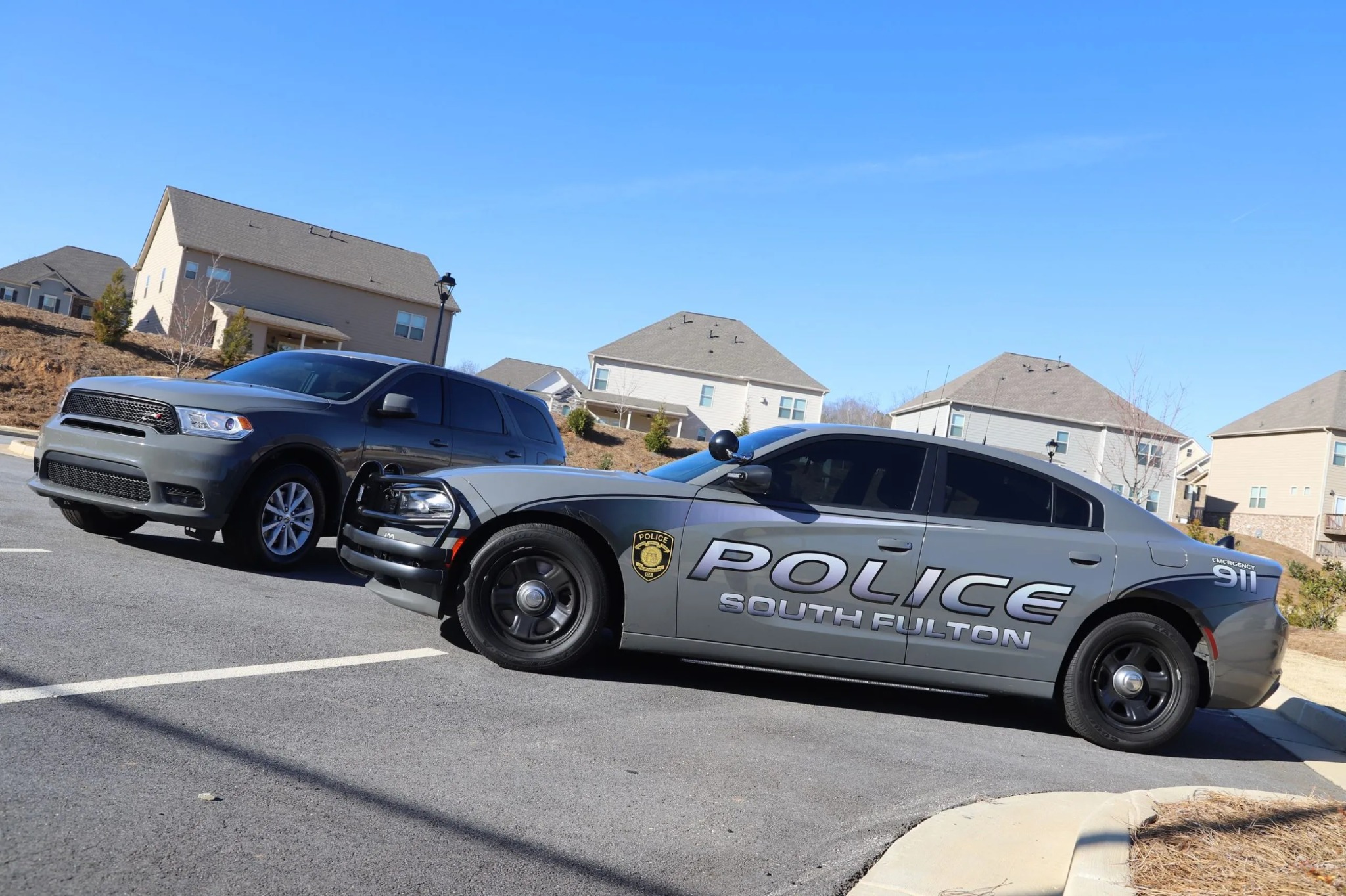
New Police Beat Design Will Cut Response Times
(CITY OF SOUTH FULTON, GA) – City of South Fulton police say a realignment and expansion of the city’s police beats — the first in nearly 40 years — will reduce response times significantly and allow officers more time for proactive patrols and interaction with residents.
Police Chief Keith Meadows and Georgia Tech professor Dr. Yao Xie recently shared with city officials the results of a study Xie conducted regarding the city’s police and fire zones. They recommended the city increase the number of beats from seven to 18 over time as it adds new officers. The report also is shaping plans for strategic growth of the city’s fire department.
“The beat system has not been redesigned for a long time — since the early ’70s,” said Xie, an associate professor with Georgia Tech’s School of Industrial and Systems Engineering. “That has had a direct impact on response times.”
Xie and a team of students based their research on a model developed for the Atlanta Police Department that analyzed possible correlations between crime detection and police zone design.
Atlanta police implemented a new zone system in March based on that model. Meadows said his department plans to grow to 10 beats by April and 15 by the end of the year. Much of that progress will depend on the hiring of new officers, a major priority for the city.
The police department added 63 new officers in 2019. Plans are to put 28 more on the street in coming months to allow expansion to 10 beats and an additional 35 officers by year’s end to grow to 15 beats.
“Assigning those new officers to more, smaller beats will help us reduce response times significantly,” Meadows said.
Currently, officers spend most of their time — about 11 hours of each shift — responding to emergency calls, according to Meadows.
“Our officers work 12-hour shifts. They basically are batting back and forth between 911 calls,” he said. “We want to reduce that to about a third of a shift. That will allow us enough time to concentrate on proactive patrols.”
In the study, Xie’s team divided the city into small cells measuring one-third of a mile square. Several factors — including actual response times and geographic, census and traffic data — were identified for every cell.
“We analyzed the workload of each cell,” Xie said. “That gave us a precise distribution for the workload throughout the city.”
The researchers found the distribution of emergency calls across South Fulton to be uneven, information that will be used in the design of a new beat structure. Meadows said he also plans to use data from the study to determine where equipment is best deployed.
“It’s a lot more than just beat design and maximizing our presence,” he said. “We’ll also use the study to distribute our technology to ensure it is focused where it is most needed.”
City fire officials also see strategic value in the study results.
“It gives us a great idea of where we need to focus resources and personnel as our department grows over the next several years,” said Chief Freddie Broome of the South Fulton Fire Rescue Department. “The study identified the need to add a third ladder company and showed where we need to place future fire stations to maximize our coverage and reduce response times.”
Enhanced presence and lower response times impact more than safety for residents. They also affect ISO ratings for homeowners and business owners, which could translate into lower insurance premiums.
Post a comment